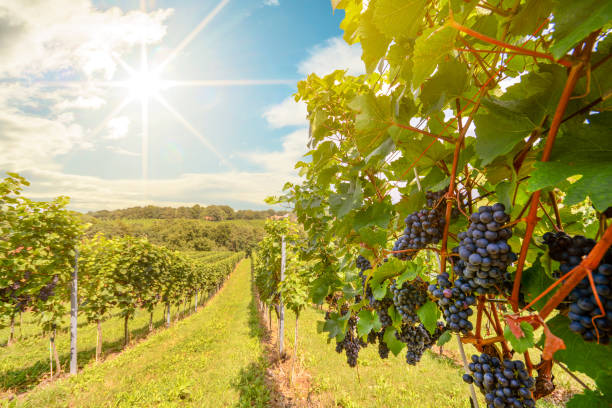
Three years ago, my wife and I moved into a new home with our four kids—and the real showstopper was the backyard. It was a dream: sprawling, peaceful, and draped with arbors covered in lush grapevines. The first year, the vines were generous, bursting with grapes. But that had little to do with me—they had been carefully tended by the previous owners.
The following year, the vines became my responsibility. Armed with enthusiasm and a YouTube education, I set out to prepare for my first grape-growing season. Honestly? I had no clue what I was doing. My pruning was hesitant, my timing uncertain. And it showed. The grape harvest that year was disappointing—nothing like the abundance we’d enjoyed before.
By year two, I was determined to do better. I took the clippers to the vines with much more confidence—or at least with more boldness. It felt risky, like I was ruining everything. But to my surprise, when growing season arrived, the vines exploded. Grapes everywhere. They hung from the arbors, tangled along the ground, and even twisted around the guide wires like they were trying to take over the yard.
It was wild. And also, a bit of a mess.
The grapes were small. Many were ruined from growing in the wrong places—trampled, sun-scorched, or simply unreachable. That season taught me a hard but important lesson: growth alone isn’t enough. It has to be *guided*. Without intentional care, even good things can grow in ways that become unmanageable or unfruitful.
Now in my third year, I’ve approached the vineyard with more humility—and more wisdom. I’ve pruned with purpose. I’ve clipped and guided the vines, shaping their path before they take over. And as the green tendrils reach and stretch, I keep stepping in—not to control them, but to help them grow where they’ll thrive.
You might be wondering—what does all this talk about grapevines have to do with parenting? The connection hit me one day while I was out in the backyard, carefully dressing the vines. As I worked, it became clear: being a vinedresser is a lot like being a parent.
Vines, left to themselves, grow wherever they want. They’ll twist along the ground, creep up places they don’t belong, and wedge themselves through cracks in fences or structures. They’re persistent, even invasive—constantly reaching for anything they can cling to. But if a vinedresser steps in with care and intention, those wild vines can be shaped, trained, and guided to grow strong and fruitful.
Children aren’t so different.
Without guidance, they’ll naturally follow the pull of their own hearts—which, as we’re reminded in Scripture, can be deceitful above all things. The heart doesn’t always lead us toward what’s right or best. Sometimes, it leads us down paths that seem easy or exciting in the moment but end in disappointment or harm. Just like vines growing unchecked, our kids can get tangled in things never meant for them.
That’s where we come in.
As parents, we are called to be both careful and intentional. Careful in how we nurture, correct, and encourage our children. Intentional in how we teach, model, and guide them toward wisdom, character, and truth. It’s not enough to hope they’ll grow the right way—we have to step in and shape that growth with love, patience, and purpose. Because just like a well-dressed vine, a well-guided child has the potential to bear incredible fruit.
The first way we must guide our children is by being careful. Now don’t misunderstand me—being careful doesn’t mean being soft or a pushover. It means being thoughtful in how we teach, protect, and lead our children.
Young grapevines, when they’re just beginning to grow, are incredibly tender. Bend them too forcefully or push them in the wrong direction, and they’ll snap. Children are the same. Their hearts and minds are still developing, and if we’re harsh, careless, or overly forceful, we risk doing damage that’s hard to repair. That’s why Scripture tells us, “Fathers, do not provoke your children to anger” (Ephesians 6:4, Colossians 3:21). Our role isn’t just to correct—it’s to guide with gentleness and wisdom.
Parenting requires constant self-checking. Are we speaking life into our kids or tearing them down? Are we guiding or controlling? When we’re not careful, we may push our children away from us—and worse, away from the true Vine Himself.
Just like a skilled vinedresser doesn’t yank or shove but gently coaxes each vine into position, we must handle our children with care—training them deliberately, with love and patience, so they can grow strong and flourish in the right direction.
The second essential principle of parenting is intentionality. We must be deliberate in what we teach, how we lead, and the values we instill in our children. Intentional parenting isn’t just about setting rules or saying “no.” It’s about explaining the why. It’s about laying down a strong foundation they can build on for the rest of their lives.
Imagine a vineyard where the vinedresser lets the vines grow wherever they please—twisting over each other, crowding the path, climbing where they shouldn’t. The result? Chaos. Overgrowth. Poor fruit. But when the vinedresser trains the vines intentionally—clipping here, supporting there—the vineyard thrives.
Proverbs 22:6 reminds us, “Train up a child in the way he should go, and when he is old, he will not depart from it.” But training requires action. It requires planning. It requires intention. You can’t “accidentally” raise wise, resilient, and grounded kids.
Lazy parenting produces lazy children—children who will grow wild, reaching into places they were never meant to go. But intentional parenting sets boundaries with love, gives purpose to correction, and helps children grow into who they were created to be.
So whether you’re tying up a wandering vine or guiding a child through a tough season—do it with care. Do it with intention. The fruit you’ll see in time is worth every thoughtful step.
 Selfless Leadership Is Purposeful Leadership