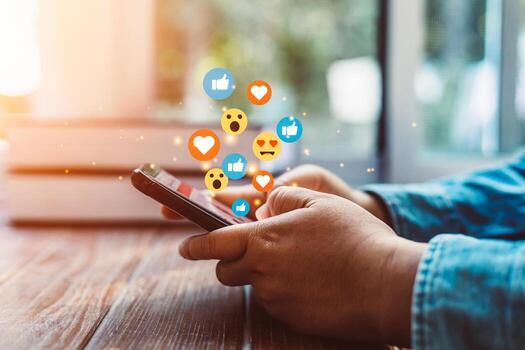
I am an ’80s and ’90s kid. I grew up without social media, and the internet was literally attached to the wall. I didn’t have a cell phone. Most of my time was spent outside—riding my bike, climbing trees, and playing with friends. I played baseball and studied every airplane that flew overhead. I spent very little time in front of a screen. I had few cares in the world, and as a kid, I felt free.
Around my senior year of high school, technology began making a significant push into everyday life. Cell phones became more common. Social media started to gain traction. Life still felt relatively free—there wasn’t constant stress or daily anxiety—but something was shifting.
By the time I reached college, a new kind of society had formed. Cell phones were everywhere. Technology wasn’t just a tool; it was a way of life. Social media became a daily staple, and suddenly everyone knew everyone else’s business. Stress levels seemed to rise. Mental health struggles became more visible and more prevalent. Life no longer felt as simple or as free.
As technology embedded itself deeper into society, we began to see the cost of constant connection. Many argue that mental health declined and suicide rates increased. Life grew more complicated, overwhelming, and pressure-filled. Instead of focusing inward—on family, friendships, and personal growth—our attention shifted outward to the nonstop flow of global opinions, conflicts, and comparisons.
Our society has become neurotic, overstimulated, narcissistic, and entitled. But why? When I was a child, life had its problems, but they were nothing compared to the problems we see today.
The more we have allowed technology to take on a dominant role in our lives, the less free our lives seem to be. We traded simplicity for constant connection. Instead of having few worries, we now live in a state of continual anxiety—plugged into every crisis, every opinion, and every conflict happening anywhere in the world.
Technology has pitted us against one another. It has intensified anxiety, depression, worry, envy, selfish ambition, pride, arrogance, and ignorance. Rather than strengthening our society, it has weakened the quality of our relationships and diminished how we treat each other.
Respect and courtesy have eroded. We have become a society willing to say abhorrent things to others with little regard for dignity or decency. The screen has created distance.
We no longer seem to know how to communicate well or hold meaningful, respectful conversations. We have become conditioned to demand what we want immediately, losing the discipline of patience and the character built through waiting.
Instead of focusing on ourselves—on the discipline, humility, and growth required to become better people—we fixate on others. We highlight their flaws, dissect their mistakes, and inject our “great” wisdom about how they should live. In doing so, we neglect self-examination.
Our youth are overstimulated, anxious, and often mentally overwhelmed, instead of being free to experience the simplicity of childhood. Many have come to believe that friendship is measured by likes and followers rather than by the depth of real relationships with the people closest to them.
Adults, too, are affected. Truth is often overshadowed by fickle feelings, easily swayed and shaped by mainstream media narratives. Instead of seeking understanding, we react. Instead of building one another up, we tear one another down.
Technology has brought remarkable advances and undeniable benefits. Yet at the same time, it has changed the human experience. Social media, in particular, has given people the freedom to share thoughts and opinions instantly—often without accountability. As Mike Tyson once said, “Social media made y’all way too comfortable with disrespecting people and not getting punched in the face for it.”
Technology promised connection and progress. What it has often delivered is comparison, outrage, distraction, anxiety, depression, and entitlement. The qualities that have come with technology have eroded away the very people we were meant to be. We no longer see value in others and in relationships. We are now consumed with ideologies, politics, and the war on the mind.
We need to get back to simplicity. Technology has become the god this world looks to for everything. It has overtaken nearly every aspect of humanity. And with AI on the move, it has removed our ability to think critically and reason carefully. We believe everything we see and read on our screens. Instead of taking the time to seek understanding, we lazily accept whatever we are told as truth.
Technology promised progress and connection. Instead, it has helped create a society increasingly bent on competing with, criticizing, and, at times, destroying one another.
Perhaps it is time to rediscover the value and importance of simplicity.
 Selfless Leadership Is Purposeful Leadership