What Matters Most

Ring, ring…”Hello?”

“Hey, Hon. I was just calling to let you know I won’t be home for dinner tonight.”

“Again? John, this is the third time this week. The kids miss you, I miss you, and I miss our family dinners.”

“I know you do, but look, Cheryl, I have a deadline on all this work I have to do, and if you want to keep living where you are and drive the cars you do, then I need to focus on what matters.”

“And what’s that, John? What is it that matters?”

“Cheryl, I don’t have time for this. I will talk to you later.” Click

“John? John? Argh, I see what matters to you, John. I just wish it was your family.”

Too often this is a familiar conversation had all over the world. Also, this doesn’t happen with just men; women are just as guilty. In today’s society, we tend to invest so much of our time and energy into what we think matters, and by doing so, we are destroying what matters most. We tend to get caught up in the idea that business, money, status, things, and so much more are what matter. Sadly, our values are placed on things that matter the least. Families are hurting, children are placed on the back burner, marriages are ending, partners are left alone, and the list could go on. Why? Because what we think matters most is what is destroying what matters most of all.

Please don’t get me wrong, I understand that business and leadership are hard. I understand that the higher your status in a company or organization, the more work and responsibility you have. I also understand that many would say that there just isn’t enough time in the day. To that, I say, where are your priorities. You see, time is what you choose it to be. As humans, we tend to complain about something, but refuse to change our lifestyle to fix what we are complaining about. Time may not be something we can physically control, but what we do with the time we are given is absolutely in our control. This is why the saying goes, “Make the most out of the time that you have been given.” 

We need to determine what really matters in our lives. What holds the true worth and value? Money is fleeting. Status changes. Businesses fail. Yet this is where we put the majority of our time and energy, but at what cost? Now, if you are in your twenties and you have no other responsibilities outside of your career, then I encourage you to pour yourself into your work. However, do not create a box for yourself that is so tightly constructed, that when and if you choose to have a family someday, you are consumed so much by your career that your family suffers. To those of you in your mid to late thirties, what is your endgame? To those of you in your early to mid forties, what have you lost because of your misplaced value?

If you are in leadership, or in a position where a company or organization is demanding so much of your time that your family is suffering, it’s time to re-evaluate where you are, what you’re doing, and why you’re doing it. Here’s the bottom line. Your family needs you. Your children need you. Your wife or husband needs you. They are what should matter most. The relationships that you build with them are what matter most. If you find yourself missing family dinner time, put down the pen, close the laptop, grab your keys, shut off the lights, and GO HOME! There is nothing in your office or work life that could matter more than the people around your dinner table. 

Work will always be there. Time with your family will not. It doesn’t matter if you are a father or a mother, your daughters and sons need to know they are important to you. They need to see you in their lives. They need to know that Mommy and  Daddy made them a priority. However, it doesn’t stop there. Your marriage should matter to you. Your relationship with your spouse should matter to you. How your children see you treat your spouse will have a lasting impression on them. When they see you not caring to spend time or not making an effort to invest or grow in your relationship with your spouse, the only example they have to look at for their future relationships is yours. 

So what matters most? Something that can be easily lost but regained, or something that can be easily lost and gone forever? Is it something that determines your wealth, power, and status, or it something that determines your worth, happiness, and joy? It’s time that we place our value in what matters most. If leadership is about one life influencing another, then the first lives that should be influenced are the ones around the dinner table. I hope you find yourself choosing to invest your time and energy in what really matters.
Gratitude

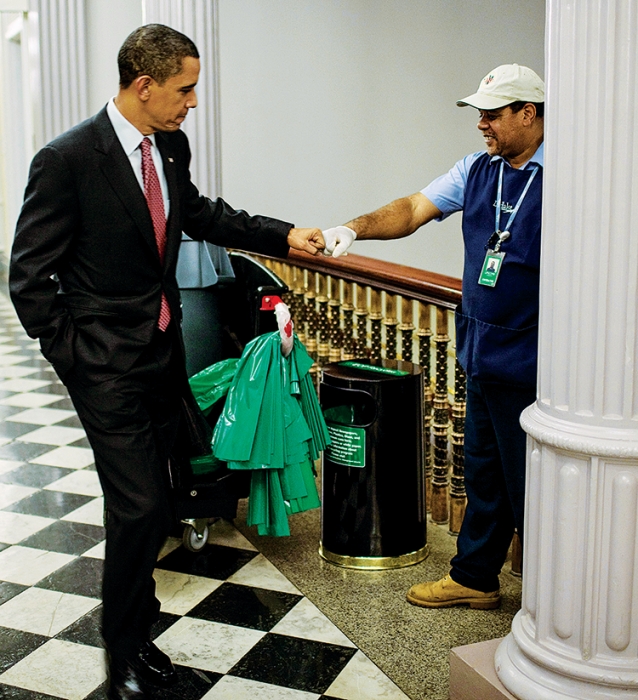
I have a question I want you to answer honestly. When was the last time you said “Thank you.” Now, I don’t mean the nonchalant “thank you” you give to someone. I mean a sincere, heartfelt “thank you.” When was the last time you made an earnest gesture of gratitude toward someone? “Thank you” is a statement we take for granted and say in a way that has little meaning. Gratitude should be something that is true and heartfelt, not something we say off the cuff.

Our society uses the words “thank you” as a sign of respect toward an action done or a service provided. I’m not saying this is bad, but when is the last time we showed gratitude for others? When was the last time you walked up to an employee, a teammate, your boss, your spouse, or even your children and said, “Thank you”? Let me pause here and provide more context. Don’t just say “Thank you”, otherwise you run the same problem that we already have; it becomes meaningless. Express WHAT you are thankful for. For example, “Thank you for being present and visible at work.” 

“Why on earth would I ever want to be that awkward?” Hey, great question. It’s only awkward because it’s not natural. When we do something unnatural, it feels awkward, and we tend to be more self conscious. However, we need to remember that leadership is not about us. It’s not about how we feel, it’s about how we make those around us feel. Showing sincere gratitude is one way to create a work environment that people feel valued and happy to be in. Taking that small, awkward step of thanking someone for something specific opens the door for positive relationships within the company or organization.

Something that needs to be done away with is cards. Thank you cards don’t mean much, especially when they have a coined phrase or copied generic statement. This does not show that the company or organization truly cares about their employees. Why? Because everyone gets the same card with the same message and nothing is personalized. If you are a CEO, manager, team leader, or whatever high title you hold, get out of the office, get out from behind your desk, and go visit and talk with those you lead. Show them appreciation that is sincere and real, not something you had your secretary put together. 

Always remember, if it wasn’t for the people you lead, you wouldn’t be in the position you are in. It is the hard work and dedication of the people below you that gives you the opportunity to be in the position you are in. I would wager that anyone who holds a high title didn’t just fall into that position, but rather worked their way to get there. If you are one of those people who worked to earn the title that you have, never forget that you were once the person you are now leading. The people who are putting in the time, effort, and hard work to produce the numbers that are needed for the company or organization need to know they are appreciated, and not in a distant, generic way. These people need to hear you say “Thank you” on a personal, real, sincere level.

“But isn’t that what I do when we have company meetings, and I thank everyone for their hard work?” Not at all. There is a major difference between thanking a group of people from behind the podium, and personally thanking John or Joann who is working hard at their station, their desk, or on their route. When it is personal, it means more, and we must never forget that leadership is not about titles, but about one life influencing another. 

I encourage you to find yourself with less time behind your desk and more time on the floor with your people. Observe, encourage, and most importantly, show each individual personal gratitude. Be specific in what you are thanking them for. Get to know your people. You might be surprised by the life stories that are working hard for you to have the title you do. People want to hear that they are appreciated, and not in some generic statement. People want to know that they, personally, are seen and matter to the company or organization for which they work.

Stop Wishing and DO!

Too often we find ourselves in the doldrums of “What if”. Too often we make excuses for why we never get things done. Too often we become slaves to apathy and excuses rather than “doers” and “go getters”. Too often we sit around wishing we would have done something, been something, or made something of ourselves. STOP IT! Stop wishing and DO something. 

No one in this world has power over you more than you do. You have the power to do all you wish you could do. Nothing holds you back but your own doubt, your own worry, and your own lack of self confidence. Excuses are for losers, and if you are reading this, YOU ARE NOT A LOSER! Stop making excuses for why you don’t get up early and get things done. Stop making excuses for why you don’t go to the gym. Stop making excuses for why you haven’t reached your goals or turned your dreams into reality. No one and nothing can hold you back except you.

Doing is a mind game. If you’re waiting for motivation, you will be waiting the rest of your life. Motivation is a fickle emotion, my friend. Motivation will get you nothing and nowhere. There is only one thing that will get you to where you want to go or help you become who you want to be: DISCIPLINE! It is only through discipline that getting up in the morning becomes doable. It is only through discipline that you go to the gym after a hard day. It is only through discipline that you work 8 hours for someone else and come home and work another 8 on your dreams and goals. Discipline is what it takes to get off of the wishing train. 

Jocko Willink, a former Navy Seal and author of Extreme Ownership, said this about discipline, “Discipline equals freedom. Discipline is the driver of daily executions. Discipline defeats the infinite amount of excuses that hold you back. Some people think motivation will get them through things, but motivation is nothing more than an emotion. Discipline is something you dictate. Motivation won’t get you to the gym; discipline will. Motivation won’t help you get an important project done; discipline will. Motivation won’t get you out of bed in the morning; discipline will.” Discipline is the key to making our wishes a reality. You are more than just a person in this giant world. You are a person with passion, fervor, meaning, and purpose. Get after what drives you. Push yourself to reach your goals and turn your dreams into reality. Stop being defeated by your mind and overpower your mind through discipline.

Also, stop with the “Only if I…” This is just as bad as “What if…” We are all creatures of bad habits, and in order to get rid of bad habits, we must become creatures with purpose and determination. What is keeping you from getting your goals accomplished? Be real and be honest with yourself. If it’s time, where can you find extra time, or what can you quit that will give you more time? Side note…your spouse and children are NOT what’s holding you back. You have a responsibility to them and should NOT sacrifice your relationships with them to reach your goals. Work within your circumstances. Quit the nonessential crap that you do. Get off your phone, Facebook, social media, and go DO something. Quit staying late at work, and create boundaries for yourself. Quit saying yes to everyone’s request for your time (unless it’s your children or your spouse!). Make your dreams a reality by quitting the stuff that doesn’t matter. 

Dwayne “The Rock” Johnson was evicted from his home in Hawaii at the age of 14. He watched as his mother tried to commit suicide during that time. Because of this, Johnson suffered with depression for a long period in his life. However, he didn’t make excuses for himself, but rather found purpose and meaning in life and worked to become a successful wrestler, movie star, and business owner. 

Tony Robbins grew up poor with a troubled childhood. He worked as a janitor and barely made ends meet. He spent a week’s savings and went to a Jim Rhon seminar. What he learned changed his attitude and outlook on life. Instead of making excuses for not achieving much or not being able to do what he wanted or wished he could do, he found a way. He chose to be different. He chose to be more than his circumstances. To this day, he is a successful speaker and author. 

Walt Disney dropped out of school, was rejected by the military, went bankrupt, had his entire animation department go on strike, and lost his sanity. However, he didn’t allow his circumstances to keep him from reaching his goals and his dreams. He knew what he wanted and worked hard to get there. He could have easily given up, chosen to leave it all behind, or blamed his inability to reach his dreams on his circumstances. Instead, he took some time, collected his thoughts and sanity, and came back swinging. He opened Disneyland and the rest is history.

You are who you choose to be, and you become what you think about. If all you think is “Only if…” and “What if…” then all you will become is a question mark in this life. Many of your circumstances are out of your control, but what you choose to do inside those circumstances is completely on you. Not all circumstances are desirable, but they should never be an excuse for never reaching your goals and becoming who we want to be. Stop wishing and DO!

Failure: What A Wonderful Thing!

“Failure” is an interesting word. This word can create fear and anxiety in many people. It can also be used as an excuse to never try anything. The thought of failure can hold people back from reaching their full potential. In leadership, failure might keep us from trying something new. It might keep us from encouraging our staff and team to think outside of the box or also try something new. The thought of failure might hinder our ability to do great things. Why is failure something we fear? Why do we see failure as a show of weakness? We need to change our perspective on failure if we are to become effective leaders, innovators, and people of change.

Leadership’s job is to help their team and staff to become better versions of themselves. This means encouraging risk taking, new ideas, and taking on leadership roles. This can be worrisome at times, unless you are okay with failure and are open to learning. Failure is not fatal. In fact, when we allow ourselves and others to fail, with a mindset of learning and growth, great things can happen. Encourage your staff to try new things, you might be surprised what others are capable of. Encourage and support their ventures, and guide from the side, but ultimately, let your staff try and fail, and when failure happens, come together and reflect on the process. Maybe there is something that could be done better. Maybe something was missing. Whatever it might be, learn from failure and let them try again.

Some of you might say, “That will cost the company or organization money.” You’re probably right, but nothing is gained unless risk is involved. Brené Brown, a research professor at the University of Houston, stated, “Vulnerability is the birthplace of courage, innovation, creativity, and change. There is no innovation or creativity without failure.” Failure leaves us vulnerable, which can be scary and uncertain, but imagine if that uncertainty led to something that put your company, your organization, your team on the map. What if failing allowed you to see the weaknesses and flaws that were holding your company back? What if failure bolstered your staff and built a better team centered approach? What if failure was the key to success?

The truth is failure is not something to fear but something to embrace. Instead of inhibiting forward progress, failure is the key that will unlock the door to uninhibited potential. When something goes wrong or doesn’t go according to plan, there is an opportunity to learn, reflect, and regroup. Imagine what would have happened if Elon Musk chose to quit after his first attempt at his initial SpaceX reusable booster launch. His company failed multiple times at the bringing back the reusable booster in a condition that could be reused. Today, SpaceX is the leading space company and is now worth over $100 billion dollars. Failure was needed to become successful.

Did you know that the Wright Brothers brought boxes of parts with them then they were testing their flying machine? They knew that they would fail multiple times, and they came prepared. They didn’t let the idea of failure or failure itself hinder them from building a flying machine. They worked through their failure, trying new things, new ideas, and new concepts. They reflected, communicated, and worked together to build their dream. Innovators, creators, and dreamers see failure as a stepping stone to success. They welcome the opportunity to reflect and learn. The large companies and organizations that are leading in their industry didn’t start with perfection. Each one of them had failures, and instead of quitting and fearing more failure, they embraced their failures and built on their new knowledge to become even greater.

As leaders, encourage your team to try new things, be innovators, problem solve, and take risks. When what was planned fails, come alongside your team and reflect on why it didn’t perform as well as hoped, work together to see what could be improved and what might need to change. Encourage your team to keep trying, to keep improving, and to not quit. After all, my guess is that you had to fail at many things until you found yourself in a leadership position. Don’t stifle the growth of your staff and team, encourage it. Celebrate failure in a way that will encourage your staff to keep trying, keep improving, and keep reflecting. How leadership reacts to failure will determine your company’s or organization’s success. The more we see failure as a learning opportunity, the more we will see our staff, team, and company grow. But if you shut down, fear, and chastise for failed attempts, you will watch your staff, team, and company disappear.   

Hold fast to the thrill of trying. Embrace the mistakes and failures that will indubitably happen. Take the opportunity to learn and reflect. C.S. Lewis said, “Failures are finger posts on the road to achievement.” Encourage your staff and team to be people of curiosity and innovation. You never know, you, your staff, your team, or even your company or organization might be one failure away from greatness.

Who Are You?

Have you ever sat and thought about you? Can you answer questions like: What makes you you? What kind of person are you? Is who you are who you want to be? What are your strengths and weaknesses? These are questions that many of us never consider. We tend to live our lives day by day; getting caught up in the current of hurry. Unless we are intentional in our desire to grow and become more self aware, we will never look into the aforementioned questions. However, if we never have a good understanding of who we are, how are we to lead others to be their best selves? It is important to take intentional time and reflect on the hard questions about who we are. It is only through self understanding that we can be effective in understanding and leading others. 

There is an interview question that I have had to answer multiple times throughout my life, and I have always had a hard time answering it, mainly because I didn’t know the answer. Have you ever been asked the question, “What are your greatest strengths and weaknesses?” Personally, I hated this questions because I started playing mind games with myself. I didn’t want to sound horrible to the people I was interviewing with, but I also didn’t want to sound haughty and arrogant either. In reality, this question is asking if you know who you are. The interviewer wants to know how authentic you will be. We will never have a truthful answer to this question, unless we spend time reflecting on who we are.

It has taken me many years to finally understand how to answer that interview question. If I was asked that question today, I would say, “I am a person who tells it like it is. I do not like to blow smoke, but would rather be upfront and honest with my thoughts, opinions, and ideas. In other words, what you see is what you get. However, there are potential problems with this, as some people have a hard time with my blunt and real nature. I can tend to come off too strong, and people might get offended by my forthrightness. This is why it is important that I know and understand who I am talking to, and shape my conversation in a way that holds true to who I am, but honors and respects the person I am talking to, and honestly, this is not always easy for me.”

Authenticity is about boldly knowing who you are and living life in a way that people see the real you. Marcus Buckingham, author, speaker, and business consultant, once said, “Authenticity is your most precious commodity as a leader.” To borrow the words of Simon Sinek, “Authenticity is about imperfection. And authenticity is a very human quality. To be authentic is to be at peace with your imperfections.Great leaders are not the strongest; they are the ones who are honest about their weaknesses. Great leaders are not the smartest; they are the ones who admit how much they don’t know. Great leaders can’t do everything; they are the ones who look to others to help them. Great leaders don’t see themselves as great; they see themselves as human.”

So, let’s revisit the questions I asked in the beginning of this post. What makes you you? What kind of person are you? Is who you are who you want to be? What are your strengths and weaknesses? Can you answer these questions honestly? I would encourage you to get input from people who you trust and will be honest with you. Ask others what they think about you. Ask them what they see as your greatest strengths and weaknesses. I truly believe that one of the most important parts of being authentic is knowing your weaknesses and having enough humility to say, “I am still working on me.” There is no such thing as a perfect leader. We all make mistakes. It isn’t until we take time to reflect on who we are, understanding the areas we shine and the areas we struggle, that we can become effective leaders. 

Brad Lomenick, author of H3 Leadership (A book I highly recommend), shares 13 key points for being authentic. 

  1. Be real in all mediums.
  2. Constantly turn the rocks over in your life and in your leadership.
  3. The more successful you become, the less accessible you are.
  4. Learn to open up.
  5. Ask great questions.
  6. Invite direct reports to do a 360 degree review of you on a regular basis.
  7. Accept a better standard. 
  8. Be interested over interesting. 
  9. Be accountable to those who know you best.
  10.  Make more of those around you, and less about yourself.
  11. Actively build a Support Network.
  12. Give others permission.
  13. Give yourself permission to be who you are. 

The list I have provided only captures the bare understanding of each point. Brad goes into more detail on his website here if you want to find out more. I hope you find time to sit down and truly dig into your authenticity. Reflection is the heart and soul of growth. However, do not waste reflection by not applying what you learn.

The Power of Being Present

Have you ever seen the Pixar film Inside Out? If you haven’t, then spoiler warning. There is a part in the movie where Joy is with Sadness and Bing Bong, Riley’s imaginary friend, and Joy is pushing to get back to their headquarters. While they were traveling through the imagination section of Riley’s mind, they noticed different structures and objects being torn down and thrown out. One of these items is Bing Bong’s rocket wagon. He runs after the characters that are about to throw out his wagon, but it is too late and they throw his rocket over the cliff. Bing Bong is devastated because he had a plan to take Riley to the moon in his rocket, and now that it has been pushed over the ledge, he will never get the opportunity to go on his trip with Riley.

At this point, Bing Bong sits down on the edge of the cliff and starts to feel sad. He starts talking about all the things he had planned and is sad that he won’t be able to do them. In steps Joy, the “leader” of the bunch, who really just wants to get back to headquarters. She tells him it will be alright, and if they just get back to headquarters everything can be fixed. She tries to get Bing Bong’s mind off of his sadness and asks about the train that could take them to headquarters. She does everything to try and get Bing Bong to just go to the train. However, Bing Bong is devastated and pays no attention to Joy.

As Joy moves out of frame, standing right behind Bing Bong is Sadness. Sadness quietly approaches Bing Bong, sits down next to him, and expresses her empathy and compassion toward Bing Bong for the situation he is in. Joy then calls Sadness out and tells her to not make Bing Bong feel worse. Joy, the “leader”, doesn’t want to deal with Bing Bong’s circumstances and cares more about getting back to headquarters. Both Sadness and Bing Bong ignore Joy and continue to sit on the edge of the cliff. Sadness gently speaks to Bing Bong and meets him where he’s at. Bing Bong is feeling overwhelmed and saddened by what he knows he just lost.  Sadness doesn’t say anything else and just listens to Bing Bong. Bing Bong embraces sadness and begins to cry. After a minute or two, Bing Bong stops crying, tells sadness he’s alright, gets up, and leads Joy and Sadness to the train station. 

This is one of the most powerful scenes in the movie and is a wonderful example of what it means to take care of people. Depending on your level of leadership within your company or organization, you are probably forced to stick to mandates, policies, procedures, and/or quotas. Even though this is part of the job expectation, when we care more about the expectations than we do about people, we lose sight of what real leadership is all about. Joy cared more about getting back to headquarters than she did about Bing Bong and his situation. She got frustrated at Bing Bong and wanted to just move on. However, Bing Bong was going through a tragic experience. He was hurt and sad, and what he really needed was for someone to listen, care, and be present. It wasn’t until Sadness stepped in and was present with Bing Bong in his situation, that the three of them were able to move forward. 

Leadership is not about mandates, policies, and meeting quotas. Leadership is about caring for people and helping them reach their full potential. There are times in leadership that the most important thing we can do for our team or our employees is to just be present. Sometimes people need to be heard. Sometimes people need to know they are not alone in their journey. Sometimes people need to have a shoulder to cry on, an ear that listens, or someone who is willing to just sit and be present with them. When we can offer this to the people we lead, forward movement will not only happen, but it will happen more productively, positively, and it will build a level of trust and respect that is unmatched.

Being present may not be easy for many of us. I know, at times, I have a hard time with it, but I am trying very hard to make it a focus in my life. I would rather people know that I care more about them as a person than I do about mandates and quotas. A company/organization is successful only if the people within it are taken care of. Take time to be present with your people. You don’t necessarily need to have the right things to say. In fact, you probably don’t need to say anything at all. People want to know that they are important, and that you are willing to be present with them and for them. Dede Handley, a contributor to Forbes Magazine, wrote, “Showing your team you care doesn’t have to add a bunch to your plate. But it does have to be a priority in your days. Start small and learn as you go. It will make all the difference.”

What Are You Reading?

Former President of the United States, Harry S. Truman, once said, “Not all readers are leaders, but all leaders are readers.” Leadership and reading go hand in hand. If leaders are not reading, they are not growing. Leaders must always be pushing themselves to improve. A stagnant leader is an ineffective leader. Leaders who find time to read, develop new ideas and concepts, and challenge themselves to be better are leaders who will have the largest impact on their team. 

Why is reading so important to leadership? The internet is filled with reasons why leaders should be readers, but I want to answer the question on a more personal note. Here are my top 5 reasons I believe it is so important for leaders to be readers:

  1. New Knowledge

I believe in lifelong learning. If you have read any of my previous blog posts, you may have noticed that I hint at never thinking you are the smartest person in the room. Reading is a way to keep learning. Not everything you read may be something you can implement, or even something that relates to you, but there is always something to learn when we read. New knowledge means personal growth. There are so many things we can learn from people who may be experts in the field of leadership. 

However, reading doesn’t necessarily mean you read self-help or leadership books all the time. I believe many fictional books hold valuable lessons in leadership and self growth as well. For example, The Chronicles of Narnia is an amazing set of stories with key elements of powerful leadership characteristics. Everything from King Peter and his relationship with his brother Edmund in The Lion, The Witch, and The Wardrobe, to Prince Caspian and Queen Lucy’s leadership qualities in the Voyage of the Dawn Treader. There is always something we can learn if we are willing to open our mind to new knowledge and ideas.

  1. Character Check

There are many instances that I find myself checking my own character against other people in leadership. Reading gives me the opportunity to self reflect on my own character traits and see what areas I could improve. When I read H3 Leadership by Brad Lomenick, I found myself convicted in many ways with the way I spend my time. Right now, I am reading through Start With Why by Simon Sinek. I find myself challenged with ways that I can make my WHY more prevalent in my life and make sure my character matches my WHY. 

Leadership is not about titles or positions, but rather how one life influences another. Without a solid character, the influence we have will be meaningless and potentially harmful. If our character is lacking in any area, people will see through our BS, and our effectiveness as leaders will be insignificant. I believe every leader should always keep their character in check, and one of the ways to do this best is through reading. If you are lacking a good understanding of quality characteristics for leadership, reading will help you create and form a foundation to build on. 

  1. Being Challenge

As leaders, we should always be challenging our way of thinking, our attitude toward leadership, our character, and our overall understanding of what leadership really means. When we read, we are challenging the status quo of our mindset. If we never challenged ourselves or our thinking, we would never grow and become better. Again, we always have something to learn, and the moment you think you’re the smartest person in the room, it’s time for you to quit. You have lost the meaning and value of leadership. 

Reading can make us feel uncomfortable, which is good. When we are challenged to think through hard things, we get the opportunity to refine our thinking and our character. We should never settle for okay. Challenging ourselves keeps us alert, awake, and aware. Most refuse to challenge themselves because it means they might be wrong, or they might put them in a vulnerable position, or they might have to put in more work. You see, that’s the difference between people who lead and leaders, the latter never back down from a challenge and are always looking for ways to improve.

  1. Encourage Change

Reading opens the door to new ideas to try, new concepts to discuss with your team, new ways to make your organization, your company, and your team better and stronger. When you read, look for the small nuggets of knowledge to take back to your team and ask questions. Get their take on the idea. Listen to what your team has to say. Reading helps us see things in a different light. If we never change the light bulbs in the house, we’ll eventually be walking around in a dark house. Reading encourages change; change in ideas, change in mindset, change in character. 

When we develop an acceptance to change, we have the opportunity to become better than we were. However, we need to be careful with who we listen to and what we read. If you find yourself reading books that put more of an emphasis on titles and positions, and less on building relationships and service, you may want to throw that book away. One of the quickest ways  to destroy your effectiveness and influence as a leader, is focusing more on your position than on the people you lead. Change is good if it challenges you to become better, but it can also be destructive if you find yourself on a pedestal. Read books that challenge you to become selfless and place others before yourself.

  1. Reflection

Reading has a way of helping us find or redefine our purpose. It gives us the opportunity to remember why we started and helps us redefine the WHY that we may have forgotten. Reading creates an atmosphere of reflection. One of my favorite things to do is go back through a book I have read and read only the parts that I highlighted. It shows me what my thought process and my attitude was like the last time I read that book. There are times when I have those “Oh yeah” moments, or “Man that’s good,” and then I have times where I go, “why would I have highlighted that?” It forces me to reflect on where I was, where I am, and where I want to go. 

Reflection is key to bettering ourselves. One of my favorite quotes about reflection comes from Confucius, “Learning without reflection is a waste. Reflection without learning is dangerous.” If we ever want to reach our full potential, we must always be in a state of reflection. If we want to become effective leaders, we must learn from our reflections. Ladies and gentlemen, we do not have all the answers, we always have something to learn, and to reach our true potential, we must humble ourselves, reflect, and learn.

I could keep going, but that would make for a long blog post. My hope from this blog is that you have found a reason to start reading or read more. Open your mind to new ideas and possibilities, keep your character in check, challenge yourself to grow, change the parts of you that hold you back, and reflect on ways you can get better. Leaders need to be readers.

Leave a comment and let me know what you are reading or what books you would recommend.

Pride Comes Before the Fall

Pride. What an ugly word. Yet, nearly every one of us struggles with it. Pride is what puffs up the chest, strokes the ego, makes us think we are always right and rarely, if ever, wrong. Pride is what tells you that your way is better, your ideas are better, and that you’re the king or queen. Pride is what will ultimately destroy your progress, your effectiveness, and your ability to lead a successful company or organization.

Most people think pride has no consequences; mainly because the consequences are not seen right away. However, there are great consequences for someone who lives a life filled with pride. Think of it this way, people don’t think eating fast food throughout the week is bad. But the more you consistently eat fast food, the worse the consequences become. Soon you are overweight, battling high cholesterol and blood pressure, and are slowly walking the path to a stroke or heart attack. Pride very much works in the same fashion. 

You may not see or feel the negative effects of pride right away, but they are there. People are slowly beginning to see your arrogance, indignation, and dictatorship style leadership. Your team is slowly beginning to waiver in their loyalty for you. Your organization will slowly start to crumble, fall, and become dysfunctional. Your pride is causing divisions within your team. Your pride is slowly making you less and less effective in your leadership and turning you into a dictator and possibly a tyrant. But all of this will happen slowly and almost unnoticeably. So much so, that you will think other people are the problem because your pride has blinded you. You’re leading your company, your organization, to a slow and painful death. 

Pride lends itself to so many other problems: Conceit, Arrogance, Selfishness, Self-absorption, and much more. Again, you may not see any of these characteristics forming, but I promise you they are. Pride has an amazing way of blinding both the heart and mind of an individual. As I mentioned above, the blindness that pride causes makes an individual point fingers and blame others rather than self-reflect and see the errors of their ways. Pride is the gateway drug to utter destruction. However, pride does not have to be the end of you, your company, or organization. Just like your physical health is up to you and the choices you make, your struggle with pride is also up to you and the choices you make.

The first step to dealing with an issue of any kind is admitting that there is one. This doesn’t mean you point fingers and blame others for the issue. After all, there is a high probability that an issue exists because of your choices and your pride. Admitting your faults, issues, and problems with pride is the first step of taking ownership. You are responsible for you. Own up to your mistakes and failures. Own your lack of humility and take the next step in the removal of pride.

The second step is to learn to shut up, watch and listen. Not only will pride blind you, it will also make you tone deaf. You need to learn to sit, watch and listen. You don’t need to have something to say every time. You don’t need to interject your ideas and opinions in every conversation. Instead, sit back, listen to what others are saying, take notes, engage in conversations with a desire to learn. Ask questions. Pride creates arrogance and the falsity of always being right. I hate to break it to you, but you’re not always right; no one is. We all have things we can learn and get better at. We need to train our ears, our mind, and our hearts to listen with the purpose of learning and understanding.

The third step is to find a support group. I’m not talking about AA or counseling. I’m talking about surrounding yourself with people who will call out your B.S. and hold you accountable. This group should NOT be filled with “Yes Men,” but rather people who will be honest and sometimes brutal; because truth can be brutal at times. This group should be people you spend a good quality of time with, people with integrity and are upright in character. These people walk the path of humility and know what it takes. The reason you need this support group is because who you surround yourself with will ultimately shape your own character. Keep that in mind as you choose who you let into your circle of influence. That will be a topic for another post.

Finally, and this may be the hardest one and possibly the deal breaker, step away. Maybe it’s time you take a sabbatical. Take time and reflect, read books from effective leaders, seek outside help, take time to defeat the ugly monster that has gripped you so fiercely. This step is not only the hardest step, because pride will tell you that you have nothing to work on, and people might lose all respect for you, but I argue that people that matter will gain more respect for you when you show you have taken ownership of your pride and realize that you are no longer an effective leader and need time to regain everything you have lost. If you want a good dose of humility, take a pay cut and go work for someone else. Pride is an ugly beast, and depending on how tight of a grip it has on you, sacrifices may need to be considered in order to win the battle.

If you are a leader struggling with pride and a sense of entitlement, I hope you heed the words I have written, and if not mine, because I’m not as famous as others, how about the words of:

Simon Sinek – 

“The great leaders are not the strongest, they are the ones who are honest about their weaknesses. The great leaders are not the smartest; they are the ones who admit how much they don’t know. The great leaders can’t do everything; they are the ones who look to others to help them. Great leaders don’t see themselves as great; they see themselves as human.”

Brad Lomenick –

“People would rather follow a leader who is always real versus a leader who is always right. Don’t try and be a perfect leader, just work at being an authentic one.”

Jocko Willink – 

“Implementing Extreme Ownership requires checking your ego and operating with a high degree of humility. Admitting mistakes, taking ownership, and developing a plan to overcome challenges are integral to any successful team.”

Sophocles – 

“All men make mistakes, but a good man yields when he knows his course is wrong, and repairs the evil. The only crime is pride.”

Leading Without Leading

I have been thinking about the concept of leading without leading for quite some time. I know, it sounds like an oxymoron. The truth is, I feel this is how it should be done all of the time. As you all are pretty aware, I believe leadership is not a position or title, but how we treat those around us. I believe this is the case for any “position” you may hold in your company or organization. If you are a manager, team leader, CEO, CFO, or whatever title you hold, leadership should focus on leading without leading.

Let me try and dissect my thinking for you with this concept of leading without leading. The first idea that came to mind was a military platoon. When soldiers are sent to war, they are stationed within a platoon. There is of course a designated leader within the platoon, but that doesn’t mean the other members of the platoon aren’t leaders. On a mission, each team member is a leader. They lead by way of listening, watching, protecting, and observing the surroundings of the rest of the team. Their leadership is about the protection and preservation of their team members. In other words, each one of them is leading without leading.

Another idea that I considered with the idea of leading without leading is our fine men and women within the police force. In one way or another, they are community leaders. They represent what the right side of the law should look like. I know many upstanding police officers in my community, and I see them as leaders for what is right. They lead through their interactions with the public. The majority of police officers around our country are amazing individuals with strong characters. Their leadership comes in the form of public interaction, honesty, integrity, and uprightness of character. They lead in so many ways without being in a direct role of leadership.

Finally, when I think about this concept of leading without leading, I think of the people at the bottom of the career ladder. I think of the minimum wage workers, the 9 to 5ers, the people that work the ugly hours that no one else wants to work. These are the people that have managers telling them what to do, how to do it, and hold them to expectations. These are the people that are living paycheck to paycheck in hopes of making next month’s rent. These are the ones that are just starting out in the workforce. This could be a kid in high school, or a single mom who had to go back to work in order to take care of her baby. These are the people who have leadership above them. It is these people that lead without leading the most. If you are one of these people, this one’s for you. 

The idea of leading without leading is a focus on actions over words. Anyone can get up in front of a group of people and say a lot of pretty words about leadership. However, unless the character and actions of that individual match what they say, their leadership falls dead. Leading without leading is about living a life of integrity, honesty, accountability, humility, and having uprightness of character. If you are the CEO, do your actions match your words in leadership? If you are a team leader, do you show leadership or do you only speak it? If you are one of those who works minimum wage and have started your climb up the career ladder, do you work with integrity, honor, and uprightness of character, or do you just follow the crowd?

Above all, never forget that leadership has nothing to do with titles, positions, or even how much you make. Leadership is about attitude, character, determination, and most importantly, how we treat those around us. Leadership is about standing out of the crowd, doing what is right no matter the cost, listening earnestly, learning wholeheartedly, and most importantly, loving unconditionally. I guess what I am trying to say is everyone has the opportunity and the chance of being a leader. Whether you think so or not you are always being watched and observed by outsiders. Live a life worthy of leadership and lead without leading.

When It’s Time To Quit

The other day, I was having a conversation with a colleague and the topic of knowing when to quit came up. The conversation led to some great discussion, but as I reflected on what we talked about, I felt that the conclusion that was made from our conversation works with any position at any company or organization. Because leadership is the one who sets the pace and encourages growth both professionally and personally, knowing when to quit might save yourself, others, and your team a lot of frustration and heartache.

Have you ever asked yourself how you know when it’s time to quit? This is a really great question to reflect and ponder. Many believe that one should quit when they are no longer happy. I disagree. There was something that once made you happy. Ask yourself why and what made you unhappy. How have you tried to do something new in your current situation to alleviate the unhappiness? Maybe you lost track of your mission and vision. Maybe you neglected your “Why”. Maybe you didn’t live up to expectations and feel defeated. Either way, all of these things can be reasserted and made a priority again. Unhappiness is a mindset. You just need to change your mindset. Please don’t get me wrong. There are times when someone might want to quit, but this is not about wanting to quit, it’s about knowing when to quit.

I believe the above reasons are not good reasons to quit. They just point to a need for self reflection and a change in mindset. However, I think there is one significant reason for someone to quit. The moment you start thinking you have nothing more to learn is the time you need to walk away. When someone thinks they are the best at their job, their position, their ability to lead, it’s time for them to step down, leave, or flat out quit. As John F. Kennedy once said, “Leadership and learning are indispensable to each other.” When you have decided you have nothing left to learn, it’s time to go.

Another way to look at this is if you are sitting in a room surrounded by other leaders and managers, and think you are the smartest person in the room, then it’s time for you to go. When a leader no longer thinks they need to learn, become better, reflect, or seek out wisdom from other leaders, then that leader will stifle the growth, passion, and ability of their company or organization to be successful. A leader should be the example for others to follow. We should want our employees and our team to grow, keep an open mind, be willing to learn, be self reflective, and never stop learning.

This post is for those in leadership who are dead set in their ways, who refuse to learn new concepts and ideas, who think they have nothing more to learn, and they think they are the smartest person in the room. This post is for all the “I” guys. The leaders that boast about themselves and their improvements and their success. This post is for leaders that refuse to collaborate, work together, and make an effort to be a part of the team. Stop hindering your company, your organization, your employees, and your team. Your effectiveness as a leader has worn off. It’s time you quit.

As a leader, never find yourself refusing to learn, grow, reflect, and change. If you do find yourself starting to be complacent and unwilling to learn, it’s time you walk away. Effective leaders are leaders who refuse to stop learning and growing. Push yourself to learn new things, try new things, collaborate with your team, and listen and learn from those you lead. Be a leader that never settles for adequate, but rather push yourself to be better each and every day.